Who is at fault for a merge collision near US 60 and Loop 303 in Surprise? Fault is typically assigned to the driver who failed to yield the right-of-way or made an unsafe lane change, though liability depends heavily on specific evidence like vehicle damage, dashcam footage, and witness statements. An injured motorist involved in a merge collision near the United States Route 60 and Loop 303 interchange in Surprise may have a legal claim when objective evidence demonstrates that another driver acted negligently. Beyond establishing fault, motorists must promptly preserve evidence and seek medical evaluations to protect both personal health and potential insurance recovery rights.
Merging onto high-speed transportation corridors requires strict adherence to traffic laws and careful spatial awareness. Motorists entering major highways such as United States Route 60 or Loop 303 must yield the right-of-way to oncoming traffic already established in the through lanes. When drivers accelerate too rapidly, misjudge gaps, or attempt to force their way across solid white lines or merging zones, side-swipe collisions and rear-end accidents frequently occur. Traffic regulations mandate that merging vehicles must match surrounding traffic speeds and verify that adjacent lanes are clear before completing any lane transition.
Establishing liability in these detailed scenarios often centers on driver error, such as failing to check blind spots, failing to signal intention, or speeding excessively while approaching an on-ramp. In fact, speed too fast for conditions or exceeding the lawful limit was reported in crashes leading to 417 fatalities and 20,722 injuries in Arizona in 2024 [1]. Eyewitness accounts and municipal traffic camera footage can provide critical corroboration regarding which vehicle possessed the legal right-of-way at the exact moment of impact. When disputing parties offer conflicting accounts of a merge crash, physical evidence left at the scene becomes paramount in determining accountability. Insurance adjusters scrutinize these details closely when evaluating insurance claims submitted by injured motorists.
If you or someone you care about has suffered injuries in a crash along local transportation corridors, discussing the details with a qualified professional can help clarify your options. You can reach our Surprise legal team at 602-222-2222 to discuss the specifics of your situation.
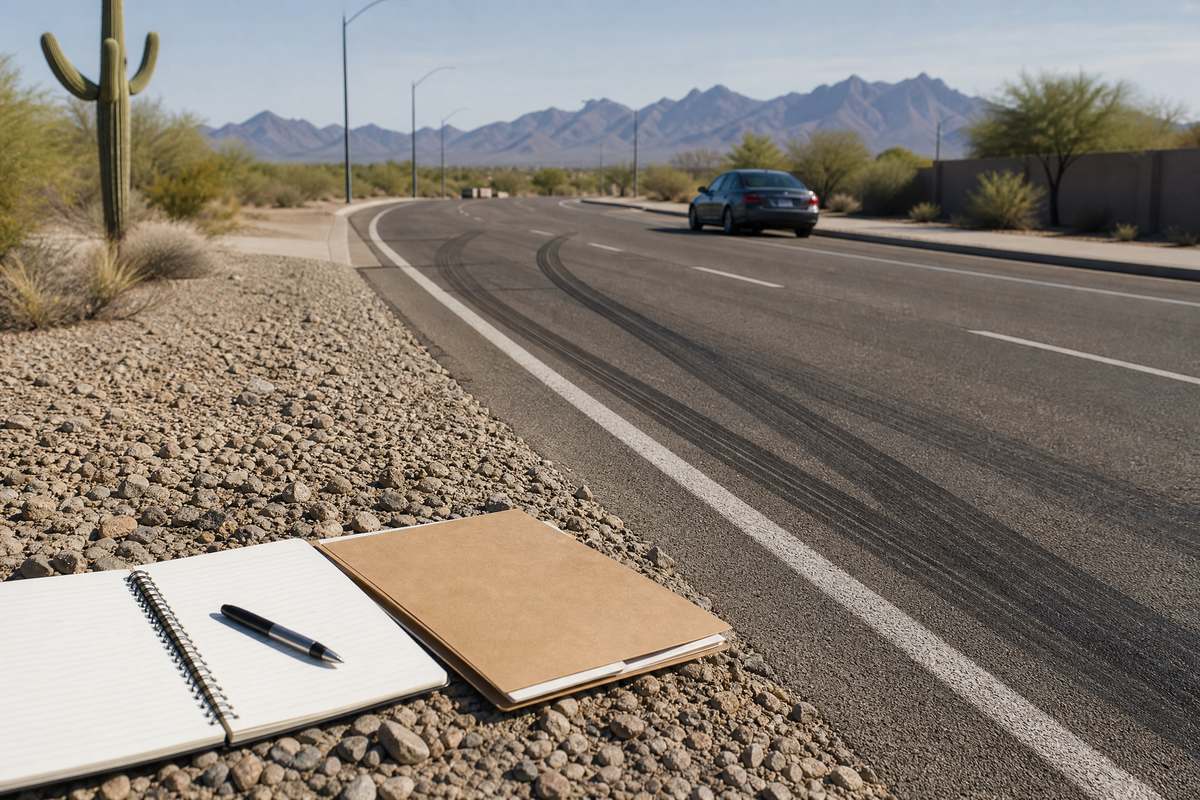
Securing compensation after a motor vehicle collision demands rigorous documentation and prompt evidence collection. Physical debris, skid marks, and electronic control module data downloaded from modern passenger vehicles often reveal pre-crash braking patterns and vehicle speed. Furthermore, obtaining professional guidance from a top rated personal injury lawyer in Surprise ensures that crucial evidence—such as surveillance recordings from nearby commercial properties or dashcam footage—is preserved before it is overwritten or lost.

Insurance adjusters frequently attempt to shift blame onto the merging motorist, arguing that the driver entering the highway assumed all risk. Countering these assertions requires a systematic review of police reports, hospital admission records, and expert reconstruction analysis when damages are severe. Documenting lost wages, out-of-pocket medical expenses, and ongoing rehabilitation costs further reinforces the foundation of an injury claim. Without comprehensive documentation, injured victims may struggle to recover full compensation for medical care and vehicle repairs. Learning more about car accident evidence collection can be vital to building a strong case.
Furthermore, medical documentation plays a decisive role in proving causation between the collision and sustained injuries. Conditions such as whiplash, soft-tissue trauma, and concussions often present delayed symptoms that may not be immediately apparent at the accident scene. Seeking immediate medical attention establishes a clear timeline connecting the collision to your physical injuries, thereby neutralizing common insurance defense arguments that your pain stemmed from a pre-existing condition or an unrelated incident.
Arizona operates under a pure comparative negligence legal framework, which significantly influences how financial recovery is handled after a multi-vehicle collision. Under Arizona Revised Statutes Section 12-2505, an injured party can pursue damages even if they share a percentage of fault for the underlying accident. However, any monetary compensation awarded by an insurance settlement or court verdict is reduced in direct proportion to the claimant’s assigned percentage of fault.
In merge collision disputes, insurance carriers often allege that both drivers contributed to the incident—perhaps claiming the merging driver failed to yield while asserting the through driver was traveling above the posted speed limit. Proving the proportional responsibility of each motorist requires thorough investigation and skilled negotiation. Having knowledgeable legal representation helps prevent insurers from unfairly inflating your assigned share of blame to minimize their payout obligations and protect your rightful recovery. As Colonel Jeffrey Glover, Director of the Arizona Department of Public Safety, noted, “The continued decline in traffic fatalities is a positive sign, but these numbers still represent lives lost and families forever changed. Too many of these crashes are the result of poor decisions — driving impaired, speeding, or not buckling up” [2].
Key Steps Following a Merge Collision:
1. Call law enforcement immediately to ensure an official accident report is filed at the scene.
2. Seek immediate medical attention even if symptoms appear minor or delayed.
3. Document vehicle damage, road signage, and visible injuries with clear photographs.
4. Avoid giving recorded statements to opposing insurance carriers before consulting legal counsel.
Time is a critical factor in pursuing legal remedies after a motor vehicle accident in Arizona. Under Arizona Revised Statutes Section 12-542, injured individuals generally have a strict two-year window from the date of the incident to file a formal personal injury lawsuit. Failing to initiate legal action within this statutory timeframe permanently bars victims from recovering compensation for their medical bills, pain and suffering, and property damage. Understanding the Arizona car accident statute of limitations is essential for protecting your rights.
Insurance adjusters often contact claimants shortly after an accident, offering quick settlement checks that fail to account for long-term medical needs or future rehabilitation expenses. Accepting such offers prematurely waives your right to pursue additional compensation if your injuries worsen over time. To explore how our firm can assist you in recovering proper compensation, you are invited to call our office directly at (602) 222-2222 for a confidential consultation.
For comprehensive support focused on your unique circumstances, you can also request a case evaluation online today.
[1] ADOT: Traffic fatalities in Arizona dip for second year in a row
[2] ADOT: Traffic fatalities in Arizona dip for second year in a row
Arizona Revised Statutes Section 12-542
Arizona Revised Statutes Section 12-2505


 Available 24/7