Arizona school zone safety depends on drivers making deliberate choices during the busiest minutes of the school day. A child walking to a bus stop, stepping into a yellow crosswalk, or moving between parked vehicles may be hard to see until it is too late. The back-to-school season is a useful reminder that a school-zone crash is not a routine traffic incident. It can change a child’s health, a family’s finances, and a driver’s future in seconds.
The safest approach is straightforward: slow down before the school crossing, put the phone away, expect the unexpected, and give every child extra space. Arizona law adds specific duties at qualifying school crossings. Under A.R.S. § 28-797, drivers may not exceed 15 mph between the required portable school-zone signs and must come to a complete stop when a person is in the crosswalk.
A detail that matters: The statute defines “school is in session” to include not only classroom hours, but also the opening and closing periods when children are traveling to or from school. A driver should never assume the risk disappears simply because the bell has not rung yet or school just let out.
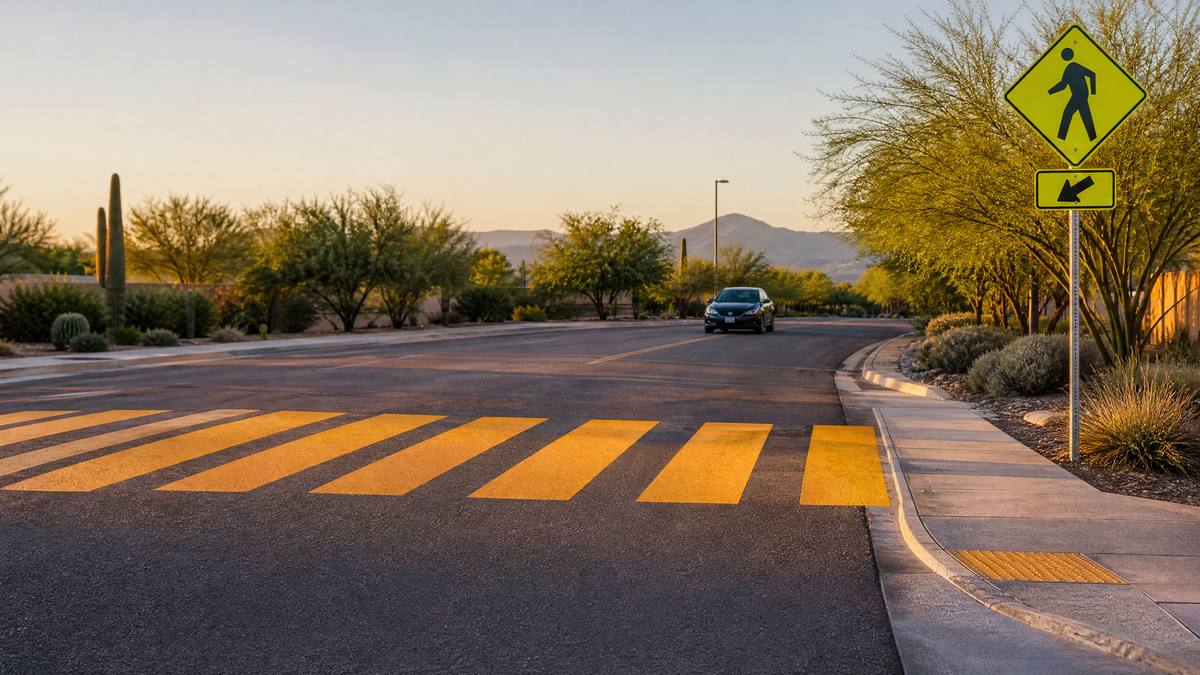
Not every crosswalk operates the same way. Arizona’s qualifying school crossings use a specific system of yellow pavement markings and portable signs. The first portable sign announces that school is in session, establishes the 15 mph zone, and prohibits passing. A separate sign at the crossing directs drivers to stop when people are in the crosswalk.
When the required signs are in place, the rule is not limited to children. A driver must stop if any person occupies the yellow school crosswalk, including a crossing guard, parent, teacher, or student. The practical point is simple: do not edge into the crossing, rush around a stopped car, or assume a child has already cleared the lane just because you can see part of the crosswalk.
Back-to-school traffic is often unpredictable. One family may be running late, another vehicle may be backing out of a drop-off lane, and a child may be focused on a friend rather than on passing traffic. The following moments deserve a driver’s full attention:
If your child was hurt by a driver near an Arizona school, you do not need to sort through medical bills, reports, and insurer calls alone. Phillips Law Group can explain your options at no cost.
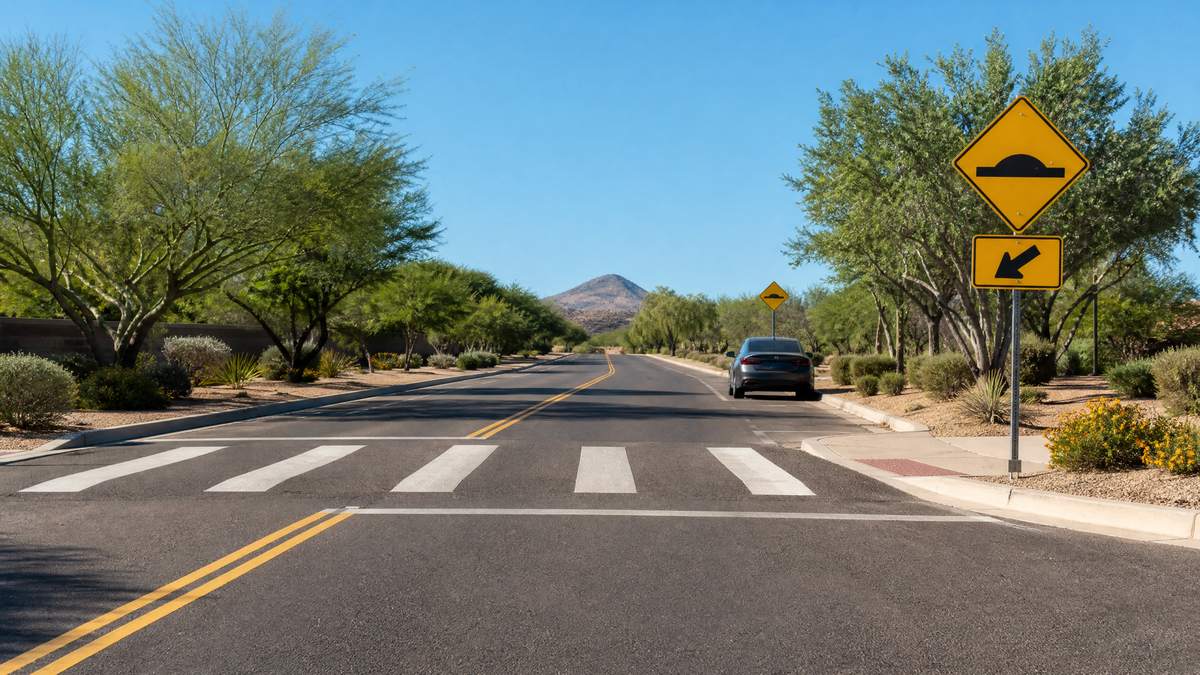
A parent’s first job after a child is struck is to get appropriate emergency care and make sure the collision is reported. After that immediate need is addressed, a few practical steps can protect information that may become difficult to find later. Save photographs of the scene, the school-zone signs, vehicle damage, the child’s shoes or backpack if relevant, and any visible injuries. Keep the report number, the names of witnesses, and all medical paperwork in one place.
It can also be important to identify the exact location and conditions of the crash. Was the portable school-zone signage in place? Was a crossing guard present? Did another vehicle block visibility? Was the child crossing in a marked location? These are not questions a family should have to answer alone, but they can shape how responsibility is evaluated. A knowledgeable Phoenix pedestrian accident attorney can help preserve and review the evidence.
School-zone safety is not about making the morning commute harder. It is about recognizing that children do not move, judge speed, or notice danger the way an adult does. Drivers who slow down early, stay patient around bus stops and crossings, and keep their attention outside the vehicle create the safety margin children need.
For families, the takeaway is equally clear. If a preventable crash injures a child, prompt care and careful documentation matter. Arizona law allows injured people to pursue accountability when someone else’s negligence causes harm, but the facts need to be protected from the beginning.
At qualifying school crossings, the 15 mph limit applies between the required portable signs while they are placed in the roadway. Arizona law defines school being in session to include the opening and closing periods when children travel to or from school. Drivers should still use care around schools at all times, even when the portable signs are not present.
Responsibility depends on the facts. A driver may be liable for speeding, distraction, failing to yield, or another unsafe act. In some cases, a vehicle owner, employer, public entity, or another party may also need to be investigated. An attorney can assess the circumstances without assuming fault before the evidence is reviewed.
Keep the incident or police report number, photographs, witness contact information, medical records, bills, and any communication from an insurer. Avoid posting about the collision on social media before you understand how those posts could be used.
Phillips Law Group is ready to listen if a school-zone crash has left your family with questions. Call (602) 222-2222 for a free, confidential case review.
This article is for general information only and is not legal advice. Every injury case is different.

 Available 24/7